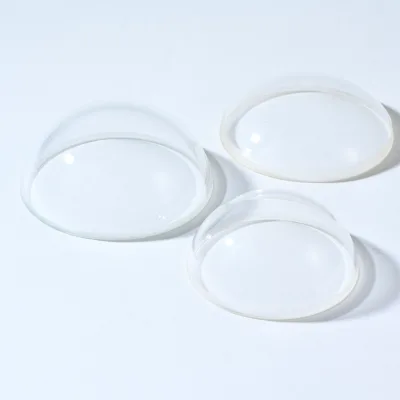
Source Clear Convex Optical Dome Lens for Photography, Medical, Lighting
Compare 30 listings for clear convex optical dome lens with transmittance over 95% and surface quality options. Buyers can evaluate focal length tolerances, material types, and customization availability for optical, medical, and lighting applications; compare the available evidence and request quotations based on your requirements.
Key considerations
Products List




Comprehensive Sourcing Guide
Clear Convex Optical Dome Lens Sourcing Guide
Procuring clear convex optical dome lenses requires a disciplined approach to balancing optical precision with mechanical durability. These components are critical in systems demanding wide fields of view, such as photography, medical imaging, and specialized lighting applications. Buyers must recognize that "clear" typically refers to high transmittance, often exceeding 95%, while "convex" defines the curvature necessary for focusing light. The sourcing process begins with defining the exact geometric and optical parameters required for the specific end-use, ensuring that the lens material and shape align with the system’s performance goals.
The market offers a variety of dome lens configurations, ranging from single-lens flat variants to complex cylindrical or spherical shapes. Suppliers often provide customization options, allowing for tailored diameters and focal lengths to meet unique engineering constraints. It is essential to distinguish between standard off-the-shelf items and fully customized solutions, as the latter may involve longer lead times and higher minimum order quantities. Understanding the distinction between these product types helps buyers select the right supplier capability, whether they need high-volume standard parts or low-volume precision optics for prototyping.
Product Scope and Observed Listing Signals
The observed product landscape includes a diverse range of optical glass components, with diameters spanning from 3mm to 300mm or even up to 500mm depending on the supplier. Listings frequently highlight specific models such as KGO107 or generic dome lens identifiers, indicating a mix of proprietary and standard offerings. Buyers should note that surface quality is often specified using scratch-dig standards, such as 60/40 or 40/20, which directly impact light scattering and image clarity. These signals help in filtering suppliers based on their ability to meet specific optical cleanliness requirements for high-precision applications.
Packaging and origin data provide additional context for logistics and quality assurance. Products are commonly packed in carton and plywood boxes, or specialized foam cartons to prevent damage during transit. Origins are frequently listed as Nanyang, Changchun, or Jiaozuo City in China, regions known for optical manufacturing clusters. While these locations indicate established supply chains, buyers should verify the specific factory capabilities rather than relying solely on regional reputation. The presence of customization availability suggests that many suppliers can adapt standard dome lenses to meet specific diameter and thickness tolerances.
Technical Specifications to Verify
Focal length and dimension tolerance are critical parameters that must be explicitly verified before placing an order. Specifications often cite focal length tolerances of ±2% and dimension tolerances of +0/-0.1mm, ensuring that the lens fits precisely into optical assemblies. Center thickness is typically controlled within ±0.1mm, which is vital for maintaining the correct optical path length in multi-element systems. Buyers must confirm that these tolerances are guaranteed for the specific dome lens geometry, as spherical variations can introduce aberrations if not strictly controlled during manufacturing.
Clear aperture and transmittance rates are equally important for ensuring optimal light throughput. A clear aperture of 90% or greater of the diameter is standard for high-performance lenses, minimizing vignetting and ensuring that the usable optical area is maximized. Transmittance exceeding 95% is a common benchmark for clear optical glass, though this can vary based on the specific glass type and coating. Additionally, surface flatness may be specified as 1/4 Lambda, indicating the precision of the optical surface. Buyers should request detailed optical drawings that map these specifications to the physical dimensions of the dome lens.
Compliance and Safety Documentation
Regulatory compliance is a non-negotiable aspect of sourcing optical components, particularly for medical and consumer electronics applications. Certifications such as ISO and RoHS are frequently cited, indicating adherence to environmental and quality management standards. Buyers must verify that the supplier holds valid certificates for the specific products being ordered, as these documents are subject to periodic audits and renewals. The presence of CE marking may also be relevant for products destined for the European market, ensuring compliance with regional safety and performance directives.
Documentation should also cover material safety and handling instructions. Optical glass is generally inert, but coatings such as anti-reflective (AR) or UV coatings may introduce specific chemical considerations. Suppliers should provide material safety data sheets (MSDS) if any hazardous materials are used in the coating process. Additionally, packaging standards should be reviewed to ensure that the lenses are protected from moisture and physical damage. Proper documentation not only aids in regulatory compliance but also facilitates smoother customs clearance and integration into the buyer’s quality management system.
Cost Drivers and Commercial Terms
Pricing for clear convex optical dome lenses varies significantly based on diameter, material complexity, and coating requirements. The observed price range spans from $0.1 to over $100, reflecting the diversity from small, simple lenses to large, precision-ground optics. Minimum order quantities (MOQ) typically range from 1 to 100 units, allowing for flexibility in prototyping and small-batch production. Buyers should anticipate higher per-unit costs for customized specifications, such as non-standard diameters or specific focal lengths, due to the additional setup and testing required.
Shipping and packaging costs are additional factors that influence the total landed cost. Suppliers often offer shipping via FedEx, DHL, or UPS, which can be expensive for heavy or fragile optical items. Packaging methods, such as electrolytic capacitor paper, foam, and carton, add to the material cost but are essential for preventing breakage. Buyers should negotiate clear terms regarding who bears the risk of loss during transit and whether packaging costs are included in the unit price. Understanding these commercial terms helps in accurately budgeting for the total cost of ownership.
Supplier Qualification and Quality Control
Evaluating supplier qualifications requires a focus on manufacturing capabilities and quality control processes. Suppliers should demonstrate the ability to produce lenses with precise irregularity of fringes, typically between 0.2 and 0.5, indicating high surface uniformity. The growth method for certain materials, such as Ky crystal, may also be a relevant factor for specific optical properties. Buyers should request evidence of in-house testing equipment and procedures to verify surface quality, clear aperture, and focal length before shipment.
Quality control should extend to the final inspection and packaging stages. Suppliers must have robust procedures for handling fragile optical components to prevent scratches or chips. The use of specialized packing materials, such as foam cartons, is a positive indicator of care in handling. Buyers should consider conducting factory audits or requesting third-party inspection reports for large orders. Establishing a clear communication channel for addressing quality issues is also crucial, ensuring that any non-conforming products can be quickly identified and resolved.
Long-Term Procurement Checks
Sustaining a reliable supply chain for optical dome lenses requires ongoing monitoring of supplier performance and product consistency. Buyers should establish key performance indicators (KPIs) related to delivery times, defect rates, and responsiveness to technical queries. Regular reviews of these metrics help identify potential issues before they impact production schedules. Additionally, maintaining a buffer stock of critical components can mitigate risks associated with supply chain disruptions or sudden demand spikes.
Technological advancements in optical manufacturing may also necessitate periodic re-evaluation of sourcing strategies. Suppliers who invest in new coating technologies or precision grinding equipment may offer improved performance or cost efficiencies. Buyers should stay informed about industry trends and engage in regular dialogue with suppliers to explore new opportunities. By maintaining a proactive approach to supplier management, buyers can ensure a steady supply of high-quality clear convex optical dome lenses for their evolving needs.
FAQs
What certifications do clear convex optical dome lenses have?
These lenses carry ISORoHS and CE certifications to ensure compliance with safety standards. Some products also meet ISO requirements for quality management. Buyers should verify specific documentation for their region before placing orders to confirm full regulatory adherence.
How is the surface quality defined for these optical lenses?
Surface quality is typically rated at 60/40 or 40/20 scratch and dig standards. This ensures minimal defects on the optical surface for high-performance applications. The flatness is often maintained at 1/4 Lambda to guarantee precise light transmission without distortion.
Can I order customized clear convex optical dome lenses?
Yes, customization is available for these lenses to meet specific project needs. Buyers can request tailored dimensions ranging from 1mm to 500mm in diameter. Customized options also include specific coatings and packaging requirements to suit unique industrial or medical applications.
What is the transmittance rate for these optical glass lenses?
The transmittance rate exceeds 95% for high-quality optical glass materials. This ensures efficient light passage with minimal loss. The clear aperture covers over 90% of the diameter, providing a wide field of view for photography, medical, and lighting applications.
Which materials are used to manufacture these optical dome lenses?
These lenses are manufactured using high-grade optical glass materials. The production process involves precise shaping to achieve single-lens or cylindrical shapes. Growth methods like Ky are utilized to ensure structural integrity and optical clarity for demanding environments.
What are the standard dimensions for these optical dome lenses?
Standard dimensions range from 3mm to 300mm in diameter for most models. Some specialized items extend up to 500mm. Dimension tolerances are tightly controlled at plus or minus 0.1mm to ensure precise fitment in optical systems and mechanical assemblies.
How are these lenses packaged for safe international shipping?
Lenses are packed in cartons with plywood boxes or foam cartons for protection. Inner packaging includes electrolytic capacitor paper or foam to prevent scratches. This robust packaging ensures the delicate optical surfaces remain undamaged during transit via FedEx, DHL, or UPS.